Training Material
NACPB
The National Association of Certified Public Bookkeepers (NACPB) enables members to learn bookkeeping, get a bookkeeping job, start a bookkeeping business, or stay current on bookkeeping.
Accounting Analytics
Accounting Analytics is an independent business network. Our network members perform core business process services for small businesses.
Bookkeeping Network
Accounting Analytics bookkeeping network members are independent bookkeeping service companies. Network members provide public bookkeeping services for small businesses.
Accounting Analytics does not provide public bookkeeping services.
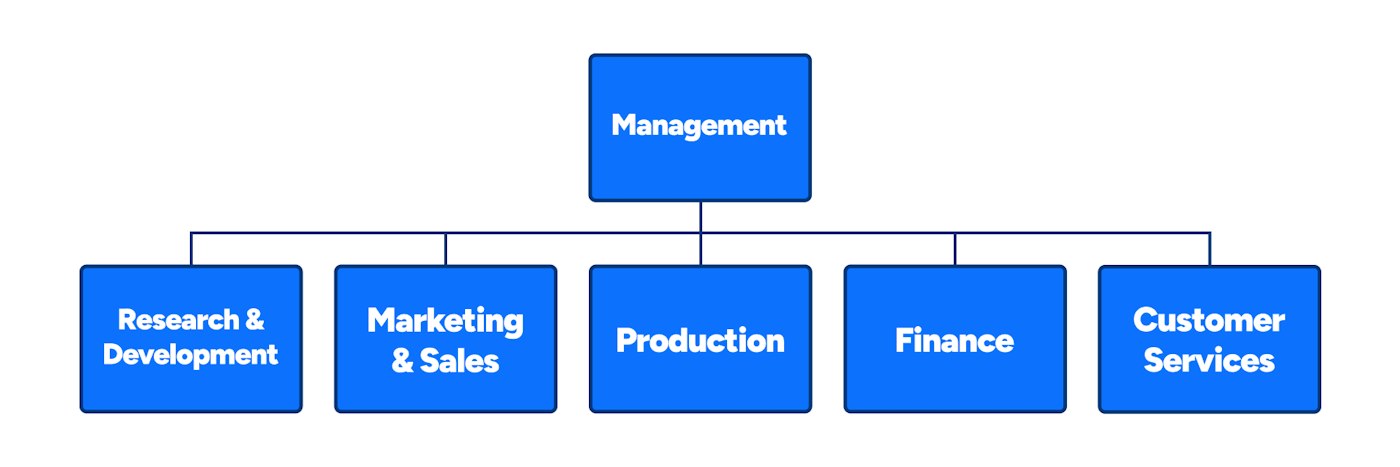
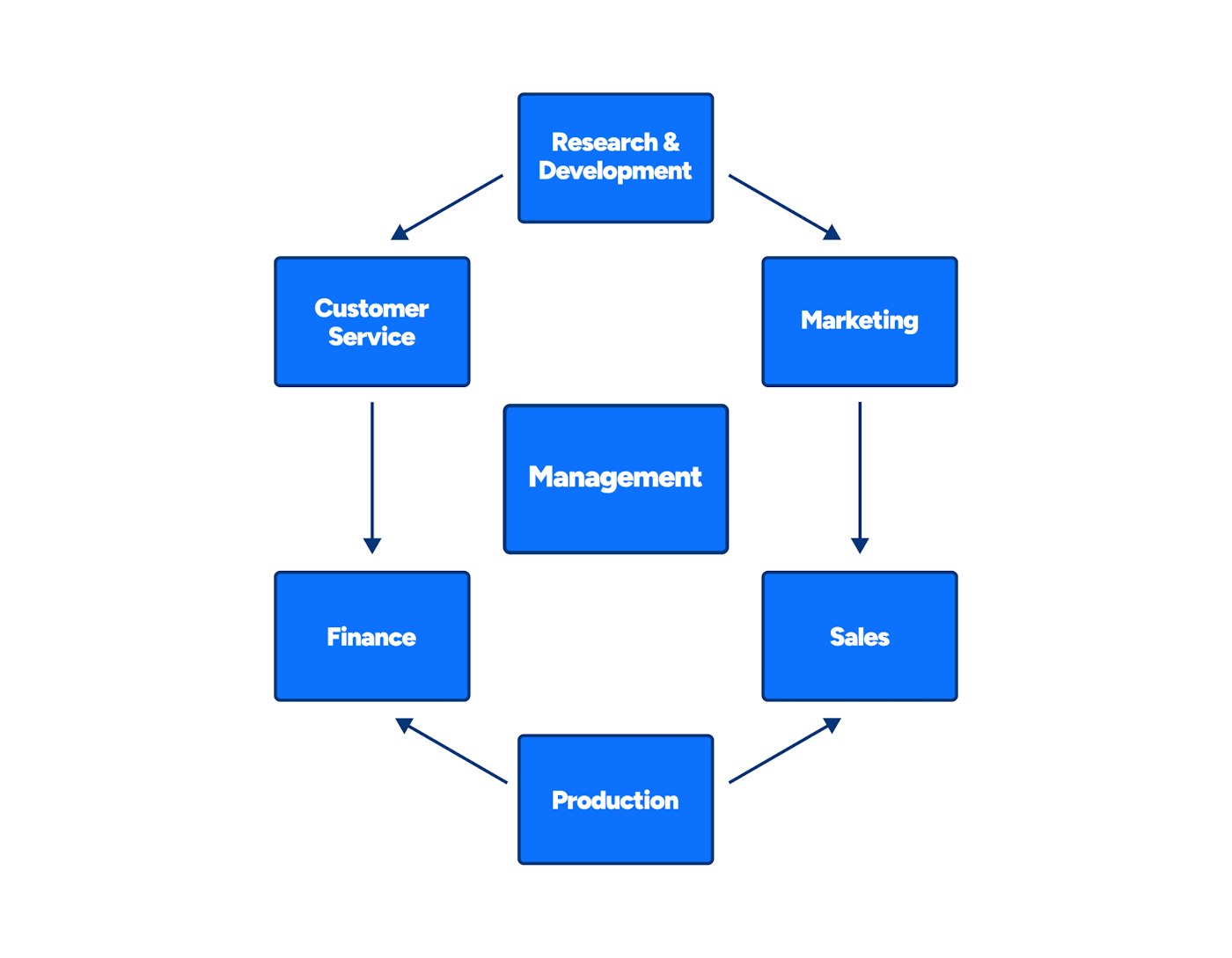
Accounting Analytics performs our network member's research, development, marketing, sales, and customer service.
Core Business Processes
Finance
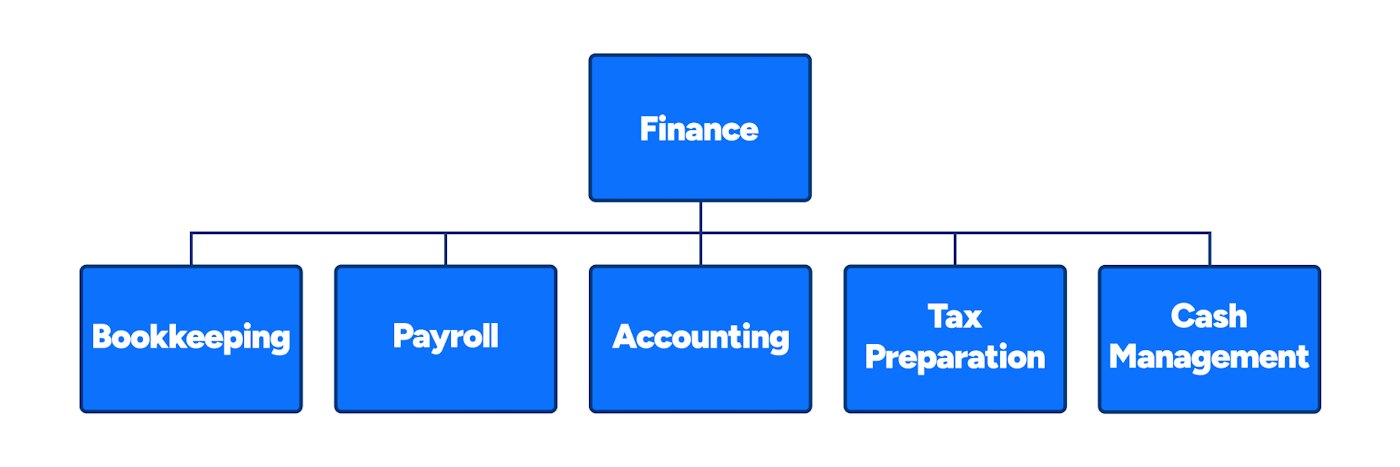
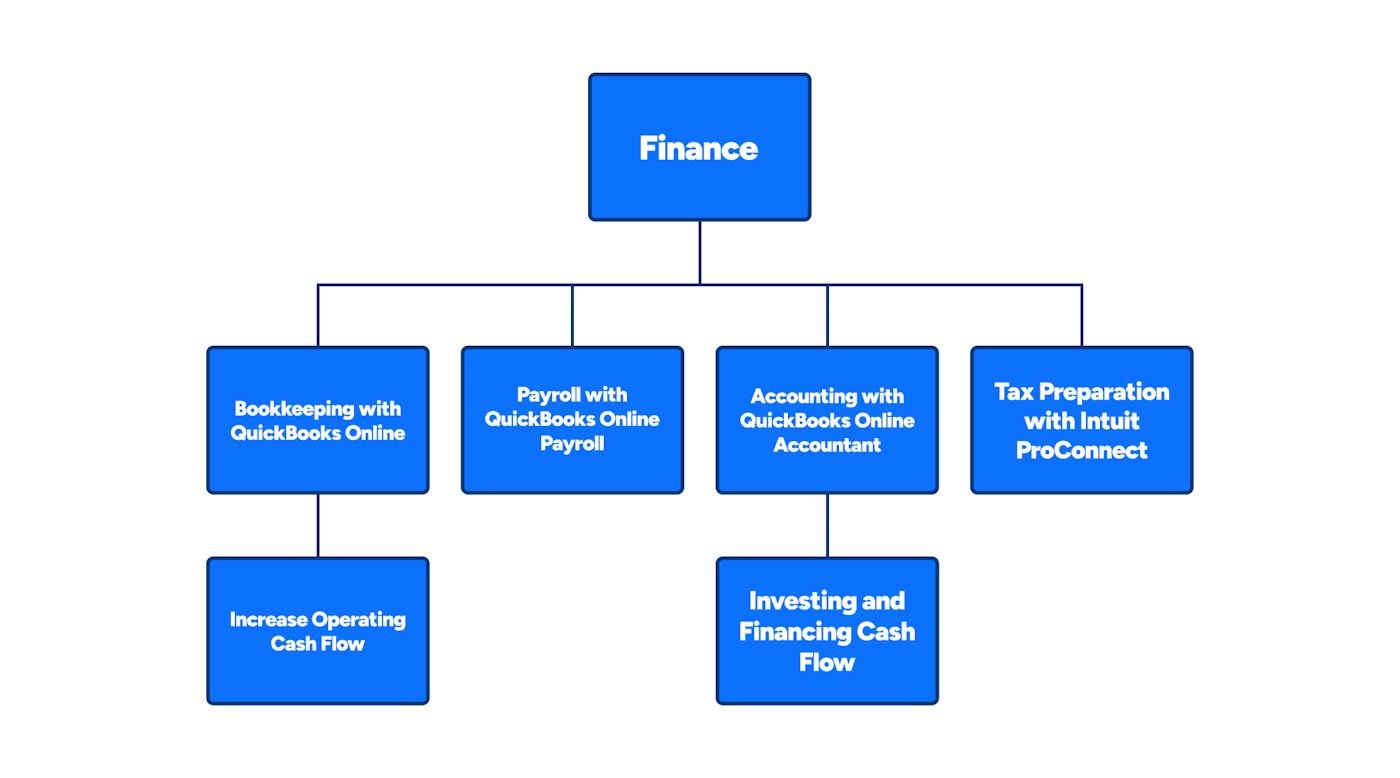
Finance is responsible for the bookkeeping, payroll, accounting, tax preparation, and cash management of an organization.
Large businesses have specialized finance teams that perform the company's bookkeeping, payroll, accounting, tax preparation, and cash management.
Small businesses have an owner, employee, or independent contractor to perform the bookkeeping, payroll, accounting, tax preparation, and cash management.
Finance Team
Accounting Analytics Accounting System
Bookkeeping with QuickBooks Online
- Bookkeeping and Accounting Overview
- Bookkeeping Tools
- Setting Up Your Company
- Processing Bank and Credit Card Accounts
- Processing Sales and Receipts
- Processing Purchases and Payments
- Communicating Business Performance
Objectives
- Efficiently and productively perform bookkeeping
- Increase operating cash flow
- Prepare timely, relevant, and reliable business information
- Understand how accounting process automation has transformed bookkeeping
Accounting Analytics Bookkeeping Process
This training presents an overview of the Accounting Analytics bookkeeping process using QuickBooks Online as explained in our Bookkeeping with QuickBooks Online Guide. This bookkeeping process enables bookkeepers to achieve these four objectives.
Bookkeeping and Accounting Overview
This section presents the big picture of bookkeeping and accounting and how and why they work together.
Accounting Process Automation
Accounting process automation automates routine accounting transactions. Automation improves the speed, accuracy, and reliability of everyday transactional documents such as sales, receipts, purchases, and payments.
Accounting Cycle
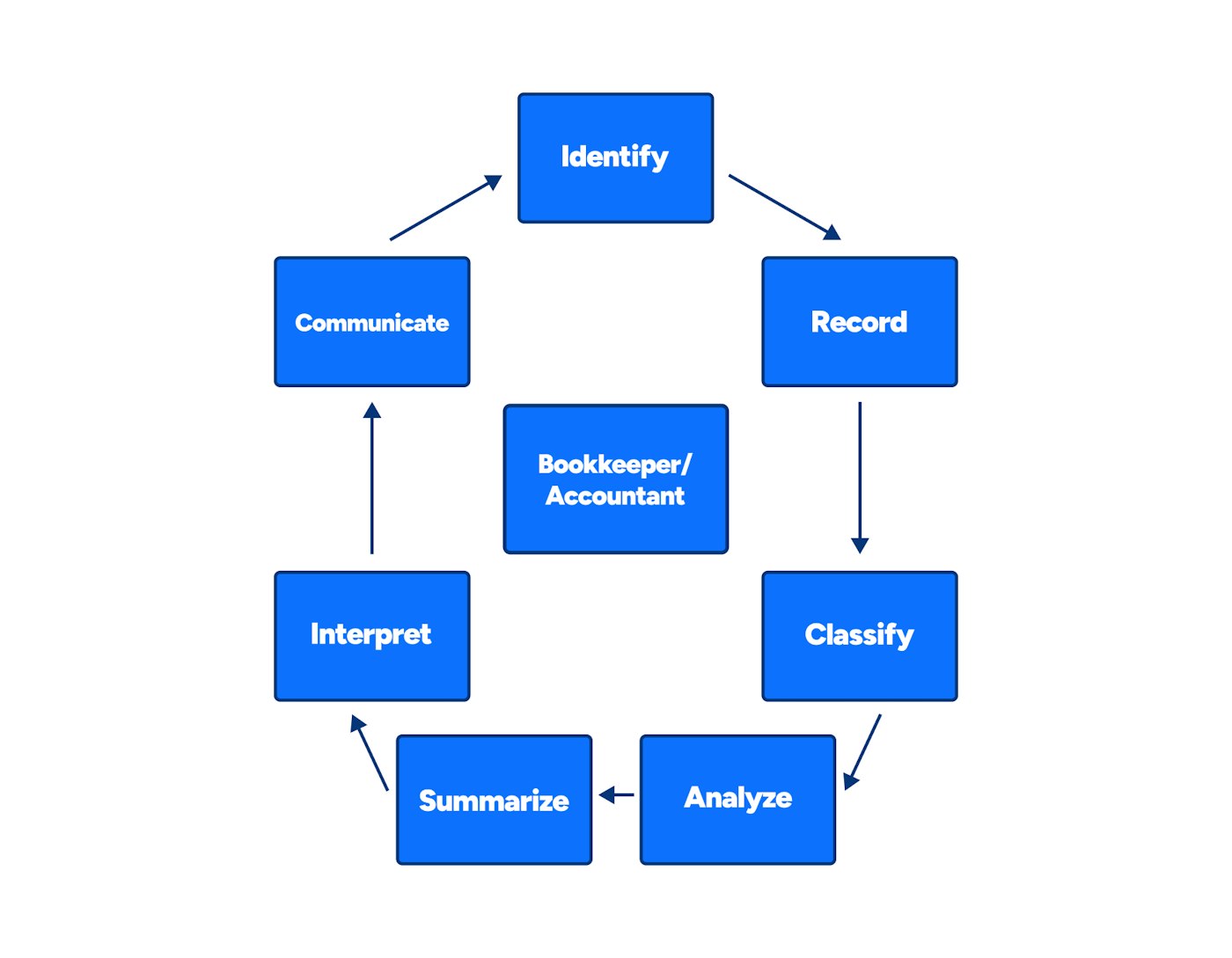
Accounting Cycle Responsibilities
- Identify
- Record
- Classify
- Analyze
- Summarize
- Interpret
- Communicate
Bookkeeping
Bookkeeping is the day-to-day identifying, recording, and classifying of financial transactions, such as sales and receipts and purchases and payments, and is the foundation of your accounting system.
Bookkeeping is critical to operating cash flow because bookkeeping controls the timing of receipts and payments. Effective cash flow management requires that receipts be received as soon as possible, and payments be paid as late as possible, but on time to maintain vendor relations. Bookkeeping also determines whether your business information is timely, relevant, and reliable.
Our bookkeeping process increases your operating cash flow and is the foundation for timely, relevant, and reliable business information.
Accounting
Accounting involves analyzing, summarizing, interpreting, and communicating business information.
Business information is communicated through financial and management reports and business performance analysis.
Business decisions are based on financial and management reports and business performance analysis.
Business information must be timely, relevant, and reliable since business decisions can make or break business success.
Business Success
- Financial Position
- Profit
- Cash flow
- Owner's Equity
Accounting Statements
- Statement of Financial Position or Balance Sheet (financial position)
- Income Statement or Profit and Loss (profitability)
- Statement of Cash Flows or Cash Flow Statement (operating, investing, and financial cash flows)
- Statement of Changes in Owner's Equity or Statement of Owner's Equity (owner's equity)
Balance Sheet
- Assets (resources) - Increase
- Liabilities (obligations) - Decrease
- Owner's Equity (ownership) - Increase
Profit and Loss
- Income - Increase
- Expenses - Decrease
- Profit - Increase
Cash Flow Statement
- Cash flows from operating activities - Increase
- Cash flows from investing activities - Decrease
- Cash flows from financing activities - Increase
Statement of Owner's Equity
- Owner's capital contribution - Increase
- Net Income - Increase
- Owner's Draws - Decrease
Timely, Relevant, and Reliable Information
Business owners build successful businesses when they make good business decisions. Good business decisions are based on timely, relevant, and reliable financial information.
Timely Financial Information
Timely financial information refers to the need for financial information to be presented to the users of the financial information in time to enable them to make information decisions.
Relevant Financial Information
Relevant financial information refers to the need for financial information to be capable of affecting the decisions of the users of the financial information. The information should be useful and not useless.
Reliable Financial Information
Reliable financial information refers to whether the information can be verified and used consistently by the users of the information with the same results. Reliability refers to the trustworthiness of the information.
Accounting System
An accounting system is a set of tools, processes, methods, policies, procedures, and controls that gather, record, classify, analyze, summarize, interpret, and communicate business information.
Accounting Analytics Accounting System
The purpose of accounting is to communicate a business's financial position, profit, cash flow, and owner's equity.
Accounting System Components
- eCommerce website
- Bookkeeping
- Payroll
- Accounting
- Business performance reports
- Business performance analysis
- Cash flow management
- Tax planning and preparation
- Employee benefits
eCommerce Website
An eCommerce website is a website with eCommerce functionality that allows customers or clients to purchase and pay for your products or services via the Internet.
Bookkeeping
Bookkeeping is the day-to-day identifying, recording, and classifying of financial transactions, such as sales and receipts and purchases and payments, and is the foundation of your accounting system.
Payroll
Payroll is generally the company's highest business expense and should receive constant attention.
Accounting
Accounting involves analyzing, summarizing, interpreting, and communicating business information.
Business Performance Reports
Financial and management reports are the window into the world of business information.
Business Performance Analysis
Business performance analysis analyzes the company's key performance indicators (KPIs). KPIs are the elements of a business performance plan that expresses what the owner wants to achieve and when they want to achieve it. They're the quantifiable, outcome-based, indicators used to measure if the owner is on track to meet their business performance goals.
Cash Flow Management
As any business owner knows, cash is king and it's no coincidence that "Cash" is the first line item on your balance sheet. A classified balance sheet is presented in the order of liquidity or in the order of the amount of time it takes an asset or liability to convert into cash.
Tax Planning and Preparation
Tax planning is a plan, from a tax perspective, to reduce tax liability and prepare for retirement.
Tax preparation is preparing the tax return after the year when most opportunities to reduce tax liability are gone.
Employee Benefits
A wage and benefits package ensures you attract and retain desirable employees and it also enables the business owner(s) and employees to reduce tax liabilities and prepare for retirement.
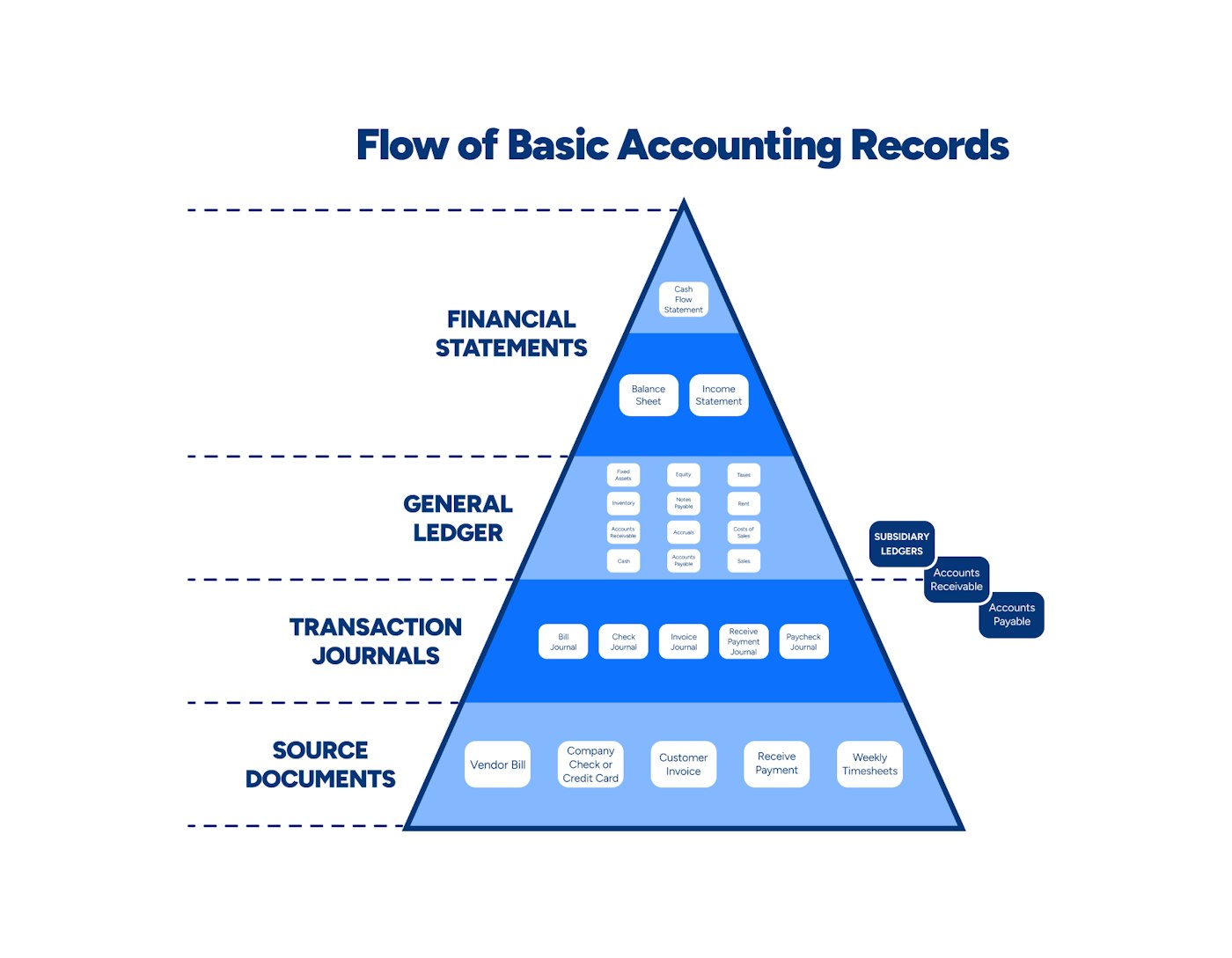
Flow of Basic Accounting Records